Showing posts with label mania. Show all posts

Friday, April 27, 2007

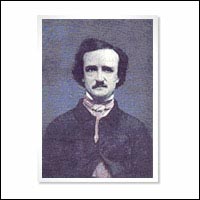
Poe's Word-Agony

Edgar Allan Poe died under mysterious conditions with days of “irregular” eating and sleeping patterns before his death. “No one seriously questioned the verdict that the culprit was liquor…science in that day being unable to define it further,” says John Walsh in his book, Midnight Dreary.

Poe himself writes in his letters:

But I am constitutionally sensitive—nervous in a very unusual degree. I became insane, with long periods of horrible sanity. During these fits of absolute unconsciousness I drank, God knows how much or how long. As a matter of course, my enemies referred the insanity to the drink rather than the drink to the insanity.
In a PBS interview, Dr. Kay Jamison confirms that the “killing sides of manic-depressive illness” are “alcoholism, drug abuse, and suicide.” She cites her and her colleague’s review of twenty studies of rates of alcohol abuse or alcoholism in patients with manic-depressive illness:

Well, if you ask writers and artists who have depression, severe depression or manic depression, what they feel is important to them about their illness and their moods in their work, what they almost always focus upon is the intensity and the range of emotional expressiveness. Learning from the pain and from the suffering, they experience the sorrow, they experience the despair of the nihilism and so forth. And on the other hand, very ecstatic and visionary states. So that's what artists and writers focus upon.
Creative individuals pour out their best rhetoric from their guts' overflow of pain. Word-agony. And it sears into our beings, cutting us with their suffering, because we've felt it too.

Readers and writers touch. And their touch is music.

Furious Seasons Blog: New Study on Bipolars Suggests Low Efficacy of Meds

As blogger Philip Dawdy notes in his post on Furious Seasons Blog, the media blinked. Again.

However, bloggers took notice of a 26-week study by The New England Journal of Medicine, published 26 April 2007. The findings confirm what bipolars blog about—the hit and miss effectiveness of medications.


The NEJM study encompassed 179 bipolar patients. Both groups took mood stabilizers. 27% of bipolar patients averted depression for 8 weeks by taking placebos, compared to 23.5% that took anti-depressants.

The poor media coverage of this landmark study underscores the importance of web social networks. As a society, we cannot depend on the media. It took notice, front-page, when mental illness ran amok recently, murdering and maiming. A media frenzy covered the Virginia Tech shootings.

However, Cho Seung-Hui was a victim, as well as those he hurt. He entered a mental facility on a mandatory seven-day hold, because he was in danger to himself and others. The health and school communities failed to take notice. And his neighbors failed to notice as well.

We as a community of human beings have a stake in treating the mentally ill and informing each other regarding scientific knowledge. If we do not collectively help those that have periods where they’re not in control of themselves, we must shoulder the burdens of their railings of madness.

Thursday, April 26, 2007

An Unquiet Mind

Poe’s well-known, harsh personality is typical of those who navigate the treacherous waters of the bipolar temperament. In her memoir, An Unquiet Mind, Dr. Kay Jamison describes the antagonistic temperament:

No amount of love can cure madness or unblacken one’s dark moods. Love can help, it can make the pain more tolerable, but, always, one is beholden to medication that may or may not always work and may or may not be bearable. Madness, on the other hand, most certainly can, and often does, kill love through its misbehavior, and, especially, through its savage moods. The sadder, sleepier, slower, and less volatile depressions are more intuitively understood and more easily taken in stride. A quiet melancholy is neither threatening nor beyond ordinary comprehension; an angry, violent, vexatious despair is both
As a sufferer of manic-depression, Jamison’s speaks about the familiar. But do we hear? Family members hear who have seen the descent of a loved one into madness. It's like a hurricane that ravages the mind. Unless the hurricane hits close to home, it's just another news story. Courageous sufferers of mental illness, such as Jamison, educate and enlighten.

Mental illness needs to come out of the closet. As we engage in more conversations about it, we not only support creative people, such as Poe, but others as well. Those others might live next door.

Wednesday, April 25, 2007

E. A. Poe: A Study of Creativity and Bipolar

Although scientific studies in recent years connect creativity to bipolar disorder (manic-depressive illness), the matter is not “settled” and controversies continue about the relationship between mood disorders and writers of prose and poetry. Edgar Allan Poe said:

Men have called me mad; but the question is not yet settled, whether madness is or is not the loftiest intelligence—whether much that is glorious—whether all that is profound—does not spring from disease of thought—from moods of mind exalted at the expense of the general intellect. They who dream by day are cognizant of many things which escape those who dream only by night. In their grey vision they obtain glimpses of eternity....They penetrate however rudderless or compassless, into the vast ocean of the light affable (“Eleonora” in Bartleby).

My position explores “much that is glorious” and perceptive about the ways that the manic-depressive (bipolar), artistic temperament influenced Poe’s creative life and his rhetoric in “The Raven.” His unique stream of consciousness from the well of the manic-depressive temperament brings forth a depth of grief and euphoria that reflects the heightened states (depression and mania), inherent in bipolar sufferers.